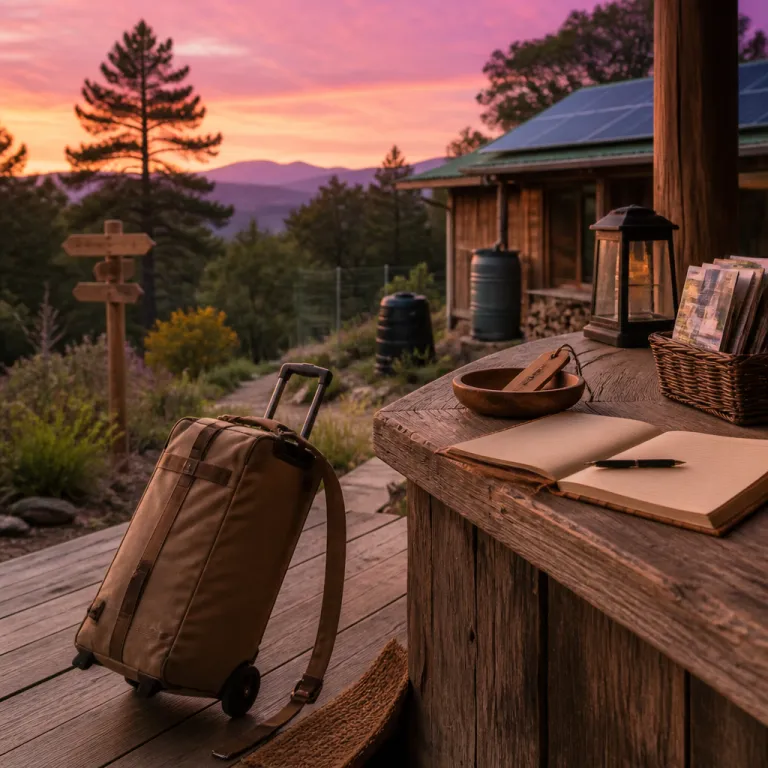
Redefining arrival: when your eco hotel is only reached by boat or track
Checking into a remote eco hotel begins long before you see the lodge. Your remote eco-hotel off-grid guest experience often starts at a tiny pier, a gravel airstrip, or a discreet gate at the edge of protected natural areas, where the last kilometres are deliberately slow and sensory. That shift in pace is intentional, because sustainable tourism relies on limiting vehicle traffic and protecting fragile ecosystems around these eco lodges and eco resorts.
Consider Zannier Île de Bendor, where private boat access sets the tone for a different kind of travel day. When a resort is only reached by boat, seaplane, or high clearance vehicle, guests must think about luggage weight, sea conditions, and arrival windows, which shapes the entire experience before the first welcome drink. Luxury eco properties in places like south Africa, costa Rica, and the united states use similar logistics to keep tourism pressure low, while still delivering a high touch welcome once you finally step ashore or arrive at the retreat.
For business travelers extending a work trip, this style of arrival can feel both indulgent and demanding. You may land from a long haul flight, then transfer to a smaller vehicle, then a boat, before reaching the eco lodge or eco resort that will host your off grid retreat. Plan your travel so that the last leg happens in daylight, because natural areas reveal their drama at golden hour and eco friendly lodges often limit night time transfers to protect wildlife.
Remote eco retreats also rely on clear pre arrival communication. Serious eco hotel teams send detailed transfer notes, outline luggage limits for small boats, and explain how weather might delay arrivals, which is part of responsible travel in wild regions. When you read reviews, look for comments about how the lodge handled disrupted journeys, because the best eco properties treat delays as an extension of hospitality, not an operational nuisance.
On site, eco-hotel staff act as calm anchors after complex journeys. They are the hosts who meet guests at the jetty, manage last minute changes, and quietly coordinate with local communities that provide boat crews, drivers, and guides. This choreography underpins a remote eco-hotel off-grid guest experience that feels seamless to travelers, even though it depends on renewable energy systems, limited infrastructure, and a deep respect for eco tourism guidelines in surrounding national park landscapes.
Off-grid power and water: how luxury feels when everything is finite
Once you arrive, the first surprise in a remote eco hotel is often what you do not see. There are no humming banks of air conditioning units, no glaring floodlights, and sometimes no obvious power lines, because many eco lodges rely on solar power, rainwater harvesting, and carefully managed batteries. This is where the remote eco-hotel off-grid guest experience becomes tangible, as every light switch and shower is part of a larger sustainable system.
Properties like Erebero Hills in Uganda, spread across a 45 acre site in Bwindi Forest, show how luxury eco design can work with climate rather than against it. Natural ventilation replaces heavy air conditioning, locally sourced materials keep embodied carbon low, and minimalist amenities are chosen for durability rather than disposability, which aligns with eco tourism principles and supports local communities through construction and ongoing maintenance. In desert and mountain settings such as The Malkai in Oman, three tented camps with 15 pavilion suites each use renewable energy and water saving technologies to sustain 4 to 10 day journeys without compromising guest comfort.
For guests, this means adapting to a different rhythm of use. You might charge devices during peak solar hours, accept that hot water takes a moment to arrive, or find that lighting is deliberately soft to protect nocturnal wildlife near the lodge. Eco friendly operations often include composting toilets in some retreats, and waste is managed through composting, recycling, and minimal generation, which is why packing reusable items is strongly encouraged for responsible travel.
Luxury in this context is not about excess, but about precision. The best eco resorts invest in high quality linens, excellent beds, and thoughtful lighting, while asking guests to share responsibility for resource use, which is clearly explained during check in. When you read reviews of eco resort stays, pay attention to how people describe water pressure, power reliability, and temperature comfort, because these details reveal whether the eco hotel has balanced sustainable tourism goals with genuine guest wellbeing.
For travelers used to conventional resorts, this can feel like a reset. Yet many executive guests report sleeping better, feeling more grounded, and noticing nature more acutely when energy is finite and nights are dark, which aligns with Global Wellness Institute findings about nervous system regulation through slow movement and nature immersion. If you are planning a luxury eco retreat in costa Rica or a remote stay in the united states, look for properties that explain their renewable energy systems clearly, as this transparency signals both technical competence and a mature approach to eco tourism.
For more context on how high end properties are rethinking energy and water, explore this analysis of the eco luxury shift in European hospitality on eco conscious hotel trends. It highlights how lodges and resorts are moving beyond symbolic gestures toward infrastructure level sustainability, which directly shapes the remote eco-hotel off-grid guest experience in both established and emerging destinations. Understanding these systems helps travelers choose eco lodges that align with their values and comfort thresholds.
Connectivity, digital detox and the reality of being unreachable
For many business leisure travelers, the most confronting aspect of a remote eco hotel is connectivity. Some lodges offer only a single Wi Fi hotspot near the main lodge, others rely on patchy satellite links, and a few eco retreats choose to remain entirely offline to protect the sense of retreat. Your remote eco-hotel off-grid guest experience will be shaped by how you negotiate this gap between constant connection and intentional absence.
Serious eco hotel operators are explicit about their stance. They will tell guests whether there is any mobile signal, whether Wi Fi is limited to certain hours, and whether streaming or heavy downloads are discouraged to preserve bandwidth for essential communications, which is crucial for safety in remote natural areas. When you read reviews, look for specific comments about call quality, video conferencing, and response times from the lodge, especially if you plan to blend work and retreat during a multi day stay.
Many executive travelers now seek a structured digital detox rather than an accidental blackout. Properties in costa Rica, south Africa, and the united states often frame limited connectivity as a feature, pairing it with guided nature walks, wellness sessions, and slow meals that help guests reconnect with nature instead of their inbox. This approach aligns with eco tourism principles, because reduced screen time tends to increase awareness of wildlife, weather, and local communities, deepening the overall experience.
Families and multigenerational groups need a slightly different strategy. Before booking, ask the lodge how they handle emergencies, what backup communication systems exist, and whether there is a clear protocol for urgent messages from home or work, because this reassurance allows guests to relax into the retreat. Some eco lodges provide a dedicated satellite phone at reception, while others maintain radio contact with nearby villages or ranger stations in adjacent national park zones.
For those used to high bandwidth resorts, the shift can be profound. Yet many guests report that after the first anxious day, the absence of constant notifications becomes the highlight of their travel, especially when combined with eco friendly activities such as guided hikes, wildlife viewing, and cultural experiences hosted by local communities. Articles on nature based honeymoon escapes, such as the guide to luxury honeymoon getaways in nature, show how couples increasingly value this kind of unplugged intimacy in remote eco resorts.
For business travelers extending a trip, the key is honest self assessment. If you truly need stable video calls, choose an eco resort closer to a regional hub, where renewable energy and connectivity infrastructure are more robust, and save the fully off grid eco lodge for a future retreat when you can be fully present. Responsible travel means matching your expectations to the realities of the destination, rather than asking fragile environments to bend to urban habits.
Logistics, safety and family readiness for remote eco retreats
Behind every serene photograph of a remote eco hotel lies a web of logistics. Transfers, luggage handling, medical access, and safety protocols all become more complex when a lodge sits hours from the nearest town or deep inside a national park, which is why planning is non negotiable for a smooth remote eco-hotel off-grid guest experience. The most reliable eco lodges treat these details as part of their core hospitality, not as an afterthought.
Start with transfers. Ask whether the resort arranges door to door transport from the nearest airport or city, whether third party drivers are vetted, and how weather disruptions are handled, because these factors directly affect both safety and stress levels on travel days. In regions like costa Rica or south Africa, where eco tourism often unfolds along rough tracks or rivers, luggage limits for small boats or light aircraft can be strict, so packing light is both a practical and eco friendly choice.
Medical readiness is another critical consideration, especially for families. Remote eco retreats should be transparent about the nearest clinic or hospital, the availability of first aid trained staff, and any partnerships with conservation organizations or ranger teams that can assist in emergencies, which is particularly relevant in wildlife rich natural areas. When reading reviews, look for mentions of how the lodge handled minor injuries, allergic reactions, or altitude issues, as these stories reveal operational maturity.
For families, the question is not whether eco hotels are suitable, but which ones are appropriate for your children’s ages and temperaments. Many eco lodges welcome families and offer nature based activities such as guided hikes, wildlife viewing, and cultural encounters with local communities, yet amenities may be more limited than in mainstream family resorts, so expectations must be aligned. The FAQ from experienced operators is clear : “Are eco-hotels suitable for families? Yes, but amenities may be limited; check with the specific hotel.”
Business leisure travelers should also consider how remote logistics intersect with work obligations. If you must be back in the united states for a meeting on Monday, avoid booking a retreat that requires multiple transfers and weather dependent boat crossings on Sunday, because responsible travel includes building buffers into your itinerary. Family focused guides, such as the overview of elegant family friendly eco resorts in North Carolina, can help you gauge which properties balance remoteness with accessibility.
Finally, remember that eco hotel staff and local people are your allies in navigating these complexities. They know the river levels, the road conditions, and the seasonal patterns that affect tourism flows, and they can advise whether a particular day is ideal for travel or better spent at the lodge. Listening to their guidance is part of respectful engagement with local communities and a cornerstone of sustainable tourism in remote regions.
Why executives are trading city suites for remote eco lodges
A growing number of executives now step off long haul flights and head not for city towers, but for remote eco lodges. They are folding two or three extra nights into business itineraries, using eco retreats as decompression chambers between boardrooms and home, which is reshaping expectations of the remote eco-hotel off-grid guest experience. This shift is driven by a desire for genuine rest, not just another polished resort lobby.
Global Wellness Institute research shows that travelers increasingly seek nervous system regulation, slow movement, and nature immersion rather than high intensity itineraries. Remote eco hotels are uniquely positioned to deliver this, because their very remoteness enforces a slower pace, with days structured around light, tides, and wildlife rather than meeting schedules, which many guests describe as the first real break they have taken in years. In this context, luxury eco properties in costa Rica, south Africa, and the united states become strategic tools for long term performance, not indulgent add ons.
Executives often arrive with laptops and deadlines, then quietly renegotiate their relationship with work. Limited connectivity, finite renewable energy, and the presence of nature outside every window encourage shorter, more focused work sessions, followed by long walks, swims, or guided excursions with local communities that anchor them in place. Reviews frequently mention that a single day at an eco lodge can feel more restorative than a week in a conventional resort, because the experience is immersive rather than performative.
For this audience, the definition of the best eco resort is evolving. It is no longer just about thread counts and wine lists, but about how effectively the lodge helps guests reconnect with nature, sleep deeply, and return to work with clarity, which is why many eco hotels now integrate gentle wellness programming rather than rigid schedules. Eco friendly design, from natural materials to open air lounges, supports this by blurring the line between indoor and outdoor spaces, making every moment part of the retreat.
Responsible travel also matters to this demographic. Executives who make decisions about corporate sustainability often want their personal travel to reflect the same values, so they look for eco resorts that use renewable energy, support local communities through fair employment, and contribute to conservation in nearby national park areas. When they share these experiences with colleagues, they amplify the impact of eco tourism and normalize luxury that is sustainable rather than extractive.
For business leisure travelers considering their first remote eco-hotel off-grid guest experience, the advice is simple. Choose an eco lodge that is clear about its sustainability practices, honest about its limitations, and serious about guest care, then treat the stay as an investment in your own resilience rather than a mere reward. The payoff is not just a beautiful setting, but a recalibrated nervous system and a renewed sense of perspective that lingers long after you leave the lodge.
The payoff of remoteness: immersion, community and a different sense of time
What ultimately justifies the extra transfers, the finite power, and the limited Wi Fi of a remote eco hotel. For many guests, it is the way time stretches and deepens when you are fully embedded in nature, with days shaped by birdsong, tides, and shifting light rather than notifications, which defines the essence of a remote eco-hotel off-grid guest experience. In these settings, even simple routines like morning coffee or evening stargazing become rituals.
Eco lodges in costa Rica’s cloud forests, south Africa’s private reserves, or the united states’ wilder corners often sit within or beside protected natural areas, where eco tourism supports conservation through park fees and community partnerships. Guests wake to mist over valleys, watch wildlife from their decks, and join guided walks that interpret the landscape through both scientific and local lenses, which helps them reconnect with nature in a way that urban parks rarely allow. This immersion is not passive sightseeing, but an active relationship with place, mediated by guides who often come from nearby villages.
Local communities are central to the most meaningful eco retreats. They appear not only as staff, but as cultural ambassadors who share stories, crafts, and food traditions, turning the lodge into a bridge between travelers and the region rather than a bubble, which is a cornerstone of sustainable tourism. When guests choose eco friendly activities such as community led hikes, cooking classes, or conservation projects, they support livelihoods and reinforce the economic case for protecting ecosystems.
Responsible travel in these contexts also means accepting certain constraints. Night drives might be limited to reduce disturbance, drone use may be banned, and some trails could close seasonally to allow habitats to recover, which can surprise travelers used to unrestricted access in mainstream resorts. Yet these boundaries are precisely what keep eco resorts from becoming victims of their own success, ensuring that future guests can enjoy the same sense of wildness.
Over several days, many travelers notice a subtle internal shift. Sleep deepens, attention widens, and conversations lengthen, as the constant background noise of urban life fades and the lodge’s rhythms take over, which aligns with the growing interest in digital detox and community based tourism highlighted in sustainable travel reports. By the time guests check out, the remote eco-hotel off-grid guest experience has often recalibrated their sense of what luxury, time, and connection can mean.
For those choosing between multiple eco resorts, look beyond glossy images. Seek out reviews that mention guide quality, community engagement, and conservation impact, because these are the real markers of the best eco properties, not just design awards. A truly luxury eco hotel is the one where the electricity comes from the sun, the menu comes from nearby farms, and the stories you take home are shared with the people who call these landscapes home.
How to choose the right remote eco hotel for your travel style
Selecting a remote eco hotel is less about chasing a list and more about matching your needs to a specific place. The remote eco-hotel off-grid guest experience varies widely between a tented eco lodge in a desert, a forest retreat in a national park, and an island eco resort reached only by boat, which is why clarity about your priorities matters. Start by deciding how remote you truly want to be, and how much connectivity, structure, and independence you require.
For executives on business leisure trips, a staged approach often works best. Begin with a luxury eco resort that is within a few hours of a major airport, where renewable energy systems are robust and medical facilities are reasonably close, then graduate to more isolated eco retreats once you understand your own tolerance for remoteness. Properties like The Malkai, with its 4 to 10 day journeys across three camps, suit travelers who already know they thrive in off grid environments and are comfortable with multi day logistics.
When evaluating options, read reviews with a forensic eye. Look for detailed comments about the arrival process, the quality of guiding, the behaviour of eco hotel staff, and the way the lodge communicates limitations around power, water, and connectivity, because these elements define the lived experience more than any design feature. Pay attention to how people describe interactions with local communities, as respectful, mutually beneficial relationships are a hallmark of responsible travel and sustainable tourism.
Also consider the specific eco systems you are drawn to. Do you want to reconnect with nature in tropical forests, arid mountains, or coastal wetlands, and are you comfortable with the wildlife that comes with each, from insects to large mammals, which can shape your sense of ease at night. Eco tourism in costa Rica might mean waking to howler monkeys, while eco lodges in south Africa bring you closer to big game, and remote retreats in the united states could focus on hiking, river journeys, or stargazing.
Finally, interrogate the sustainability claims. Genuine eco resorts are transparent about their use of renewable energy, their waste management systems, and their contributions to conservation and community projects, rather than relying on vague eco friendly language. The most credible eco hotel operators share data, partner with conservation organizations, and invite guests to see behind the scenes, turning sustainability from a marketing line into a tangible part of the remote eco-hotel off-grid guest experience.
As one seasoned operator’s FAQ puts it with disarming clarity : “What amenities are typically available? Basic comforts like beds, bathrooms, and lighting; limited electricity and internet.” That sentence captures the essence of off grid luxury, where comfort is assured but excess is intentionally edited out in favour of connection, presence, and a lighter footprint on the places we are privileged to visit. Choosing such lodges is not just a travel decision, but a statement about the kind of tourism future we want to support.
Key figures shaping remote eco-hotel and eco tourism trends
- According to a recent Sustainable Travel Report, around 70 % of travelers now actively seek eco friendly accommodations, indicating strong demand for eco hotel stays that prioritise renewable energy and reduced impact.
- Many remote eco lodges operate with limited electricity and internet, offering “basic comforts like beds, bathrooms, and lighting; limited electricity and internet”, which sets clear expectations for the remote eco-hotel off-grid guest experience.
- Journeys at properties such as The Malkai in Oman typically last between 4 and 10 days across three tented camps, showing how eco retreats encourage longer, more immersive stays compared with conventional weekend breaks.
- Sites like Erebero Hills in Uganda, spread over approximately 45 acres of forest, demonstrate how eco resorts use expansive natural areas to disperse guests and reduce pressure on sensitive habitats.
- Global wellness research highlights a marked increase in travelers seeking nature immersion and nervous system regulation, reinforcing the role of remote eco hotels as key actors in sustainable tourism and wellness focused travel.
FAQ about remote eco-hotel off-grid guest experience
What amenities can I realistically expect at a remote eco hotel ?
Most remote eco hotels offer comfortable beds, private or semi private bathrooms, and reliable basic lighting. Power may come from solar panels with limited capacity, and internet access is often slow or restricted to communal areas. As one operator states : “What amenities are typically available? Basic comforts like beds, bathrooms, and lighting; limited electricity and internet.”
How do eco hotels manage waste and protect the environment ?
Serious eco lodges use a combination of composting, recycling, and strict waste reduction to minimise their footprint. Many rely on composting toilets, filtered greywater systems, and careful sourcing to avoid excess packaging. These practices support eco tourism goals and help protect nearby national park ecosystems and other natural areas.
Are remote eco hotels suitable for families with children ?
Many eco hotels welcome families and offer nature based activities such as hiking, wildlife viewing, and cultural experiences with local communities. However, amenities like pools, kids’ clubs, and extensive menus may be more limited than in mainstream resorts. The standard guidance is clear : eco hotels can be excellent for families, but you should always check specific facilities and safety arrangements before booking.
How should I prepare for a remote eco-hotel off-grid stay ?
Preparation starts with reading the property’s information carefully and asking detailed questions about transfers, connectivity, and medical access. Pack light, bring reusable items such as water bottles and bags, and be ready for limited connectivity and finite power. Operators often advise guests to research amenities, pack appropriately, and be ready for a more rustic, nature focused experience than in conventional resorts.
What kind of activities are usually offered at remote eco lodges ?
Typical activities include guided hikes, wildlife viewing, birdwatching, and cultural encounters with nearby villages or local artisans. Many eco retreats also offer wellness experiences such as yoga, meditation, or river swims that help guests reconnect with nature. These programmes are designed to support responsible travel and sustainable tourism by deepening understanding of local ecosystems and cultures.