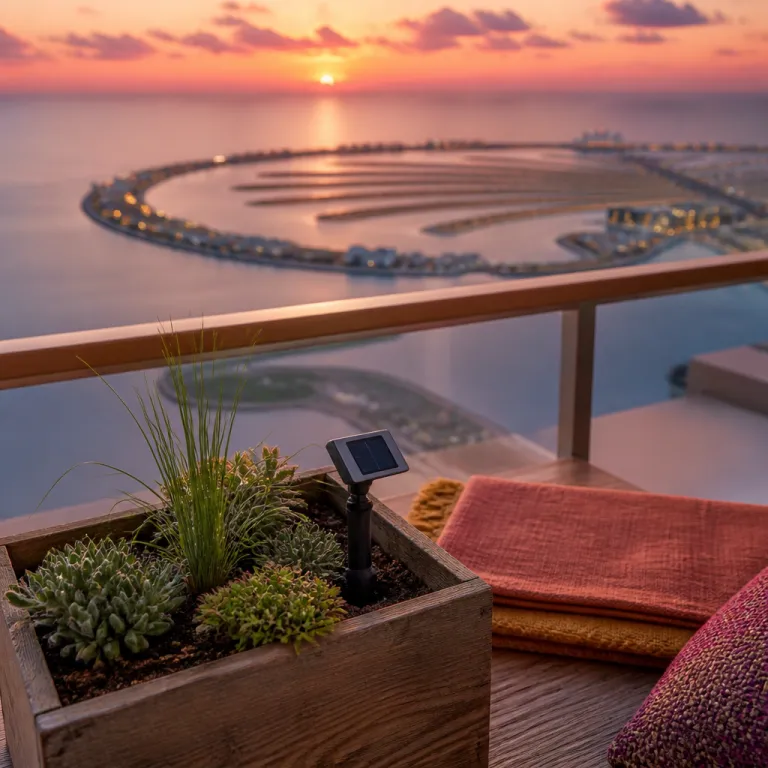
Six Senses Palm Dubai eco-luxury opening 2026: desert test for a global eco brand
Six Senses Palm Dubai eco-luxury opening 2026 is set to bring 61 all-suite keys and 172 branded residences to the West Crescent of Palm Jumeirah, placing serious sustainability claims under the harsh light of the Gulf sun. The resort, designed by Cape Town based SAOTA with a coral reef inspired silhouette, targets LEED certification while complying with Dubai’s EHS Green Building Code, a combination that will demand rigorous energy modelling, efficient façades, and careful water management in a desert climate where every kilowatt and every litre counts. For couples weighing a romantic escape in Dubai against lower impact island retreats in places such as the Maldives or Fiji, this opening raises a pointed question about whether eco-luxury can be credible on a man made palm shaped island.
The Six Senses brand has built its reputation on sensory immersion and low impact stays, from jungle valleys in Bhutan to remote bays in Vietnam, so expectations for authentic senses driven experiences on Palm Jumeirah are high. Guests booking Six Senses Palm Dubai eco-luxury opening 2026 will look for the same layered connection to place they find at properties such as the forested valley retreat in Bhutan or the ocean facing villas at Con Dao in Vietnam, where the view is framed by native vegetation rather than towers and highways. The challenge in Dubai will be to translate that senses first philosophy to a skyline dominated by glass and concrete while still offering a calm view over the bay and the wider emirates coastline.
Six Senses arrives in the United Arab Emirates with a clear playbook shaped by its island retreats in the Maldives, its hillside lodges in India, and its coastal enclaves in Europe, yet Palm Dubai is a different proposition entirely. On a man made palm shaped island, the resort must reconcile high density development with the brand’s emphasis on nature, which in other locations such as Zil Pasyon in the Seychelles or the Douro Valley in Portugal comes almost effortlessly. Couples comparing Six Senses Palm Dubai eco-luxury opening 2026 with stays at Maldives Senses, Vietnam Senses, or India Senses properties will want transparent reporting on energy use, water sourcing, and habitat restoration rather than generic Arabia Senses marketing language.
The operator’s global portfolio gives useful context for what might unfold on Palm Dubai, because the same senses led design language appears in very different geographies. At Con Dao in Vietnam, for example, timber pavilions open to the bay and prevailing breezes, while at Crans Montana in the Swiss Alps the architecture leans into snow, slope, and valley views, yet both rely on passive design to reduce mechanical cooling or heating loads. If Six Senses Palm Dubai eco-luxury opening 2026 follows that pattern, guests should expect deep overhangs, shaded courtyards, and carefully oriented suites that reduce solar gain while preserving a cinematic view of the united skyline of Dubai Marina and the open gulf beyond.
For eco conscious couples, the key question is whether this new resort will behave more like an island sanctuary or a conventional urban tower with a green narrative. The brand’s work with MAB Environmental Consultancy suggests a serious attempt to adapt its senses focused ethos to the realities of the Arab Emirates climate, rather than simply importing a template from Europe or Asia. Yet only once the first guests check in to Six Senses Palm Dubai eco-luxury opening 2026 and experience the property’s energy performance, water systems, and community engagement will it be possible to judge whether this desert sustainability experiment has genuinely shifted the dial for luxury in Dubai.
LEED, district cooling and water: how sustainability will actually work on Palm Dubai
On Palm Jumeirah, LEED certification is not a marketing flourish but a demanding framework that will shape everything from façade glazing to back of house equipment at Six Senses Palm Dubai eco-luxury opening 2026. In a desert city where air conditioning can account for more than half of a building’s energy use, LEED on Palm Dubai means high performance insulation, low solar gain glass, and intelligent controls that respond to occupancy and external temperatures rather than running at full power all day. For couples booking a suite, the impact will be felt in quieter, more stable room temperatures and a softer environmental footprint, even as they enjoy a wide view over the bay and the united skyline of the emirates.
The resort will plug into Dubai’s district cooling network, which centralises chilled water production to serve multiple buildings more efficiently than individual chillers, a critical step in a place where summer temperatures routinely exceed 40 degrees Celsius. Solar assisted hot water systems will preheat water for guest suites, spa facilities, and the 60 000 square foot wellness club, reducing reliance on fossil fuel generated electricity while still delivering the pressure and temperature luxury travellers expect. Greywater recovery will capture lightly used water from showers and sinks, treat it on site, and reuse it for irrigation, allowing the landscape design by SAOTA and its partners to maintain lush planting without the excessive potable water use that has historically defined many Dubai resorts.
Earth Lab, a signature feature of Six Senses properties, will sit at the heart of this infrastructure story and aims to make the systems visible rather than hiding them in basements. At Six Senses Palm Dubai eco-luxury opening 2026, Earth Lab is planned as a hands on sustainability studio where guests, residents, and the wider Dubai community can attend workshops on topics such as greywater reuse, solar energy, and waste reduction, turning the resort into a small scale environmental campus. The brand describes the concept succinctly in its own materials, stating that "Earth Lab: hands-on sustainability workshops open to guests, residents, and the wider Dubai community" and this explicit commitment to education will be a key differentiator on Palm Jumeirah.
For couples used to staying at island retreats such as Zil Pasyon in the Seychelles or at riverfront properties in the Douro Valley, the idea of a sustainability lab in the middle of Dubai may sound abstract, yet it can be surprisingly tangible. Workshops might include guided tours of the mechanical plant, where engineers explain how district cooling interfaces with the building management system, or tastings in the organic garden that show how composted food waste from the restaurants feeds soil health. This mirrors the approach taken at other Six Senses properties, where senses driven experiences connect guests to the source of their electricity, water, and food, whether that is a micro hydro turbine in Bhutan, a geothermal borehole in Iceland, or a solar array in the Arab Emirates.
Water remains the most sensitive resource in the United Arab Emirates, and Palm Jumeirah’s reliance on desalination adds another layer of complexity for Six Senses Palm Dubai eco-luxury opening 2026. By combining low flow fixtures, smart irrigation, and drought tolerant planting with greywater reuse, the resort can significantly reduce its draw on municipal supplies while still maintaining the lush gardens and shaded walkways that couples expect from a romantic island style retreat. For travellers who have experienced geothermal powered hotels in Iceland, such as those featured in our guide to geothermal hotels where volcanic energy powers a new kind of luxury, the Palm Dubai project will offer a contrasting case study in how luxury hospitality can adapt to a hot, arid, energy intensive context.
From Maldives to Dubai: can an island retreat ethos survive on a man made palm
Six Senses has honed its island retreat credentials in places such as the Maldives, Fiji, and Con Dao in Vietnam, where the senses led experience is inseparable from the surrounding reef, lagoon, and forest. At Maldives Senses resorts, villas often sit above clear water with a direct view of coral gardens, while at Vietnam Senses properties the architecture steps back from the shoreline to protect dunes and native vegetation, creating a layered transition from room to bay. Couples who have stayed at these properties, or at hillside retreats in Bhutan and India Senses lodges, will arrive at Six Senses Palm Dubai eco-luxury opening 2026 with a clear mental benchmark for what an island sanctuary should feel like.
The Palm Jumeirah setting is different, yet the brand’s global network offers clues to how it might respond. At Zil Pasyon, for example, villas are threaded between granite boulders rather than imposed on top of them, while at Senses Douro in Portugal Senses properties, architecture hugs the contours of the valley to preserve terraced vineyards and long river views, demonstrating a consistent respect for topography. Translating that approach to Palm Dubai will likely mean using biophilic design, native planting, and careful sightlines to soften the edges of the man made island, so that from a suite terrace the view feels more like a natural bay than a reclaimed sandbar in the Arab Emirates.
Family travellers will also watch how the resort handles the question of child age policies and programming, because many couples now travel with young children but still seek a calm, adult oriented atmosphere. Six Senses typically offers child friendly activities that are rooted in nature and culture rather than screens, and Earth Lab at Palm Dubai could host workshops where a child learns about coral restoration or desert ecology while parents enjoy the wellness club. When you check availability for Six Senses Palm Dubai eco-luxury opening 2026, pay attention to how child age brackets are defined, as this can influence pricing, access to certain areas, and the overall ambience of pool decks and restaurants.
The brand’s expansion into the Arab Emirates also intersects with broader regional projects such as Emirates Senses developments in Saudi Arabia, including Senses Amaala on the Red Sea coast, where desert, reef, and wadi landscapes converge. These Arabia Senses and Saudi Arabia projects share a common narrative about regenerative tourism in fragile environments, and Palm Dubai will inevitably be compared with them on metrics such as energy intensity, water use, and community benefit. For couples who split their travels between Europe, India, Thailand, and the Gulf, the ability to evaluate a consistent sustainability standard across Senses London, Italy Senses, and future Saudi Arabia coastal resorts will be increasingly important.
Within the wider Six Senses portfolio, urban and near urban openings such as Senses London and the Silver Dollar Hotel in Denver, profiled as an urban sanctuary with a storied past, show how the brand adapts its island retreat DNA to dense contexts. In Thailand, our coverage of Koh Yao Yai island eco luxury stays illustrates how Thailand Senses style properties balance reef protection with refined travel, while in Europe the Douro Valley and Crans Montana locations demonstrate cold climate strategies. As Six Senses Palm Dubai eco-luxury opening 2026 approaches, couples comparing options from Portugal Senses vineyards to Italy Senses city conversions, from Arab Emirates coastal resorts to remote bays in Fiji, will have an unusually rich set of reference points to judge whether this desert sustainability experiment on a man made palm can truly stand with the brand’s most respected island retreats.