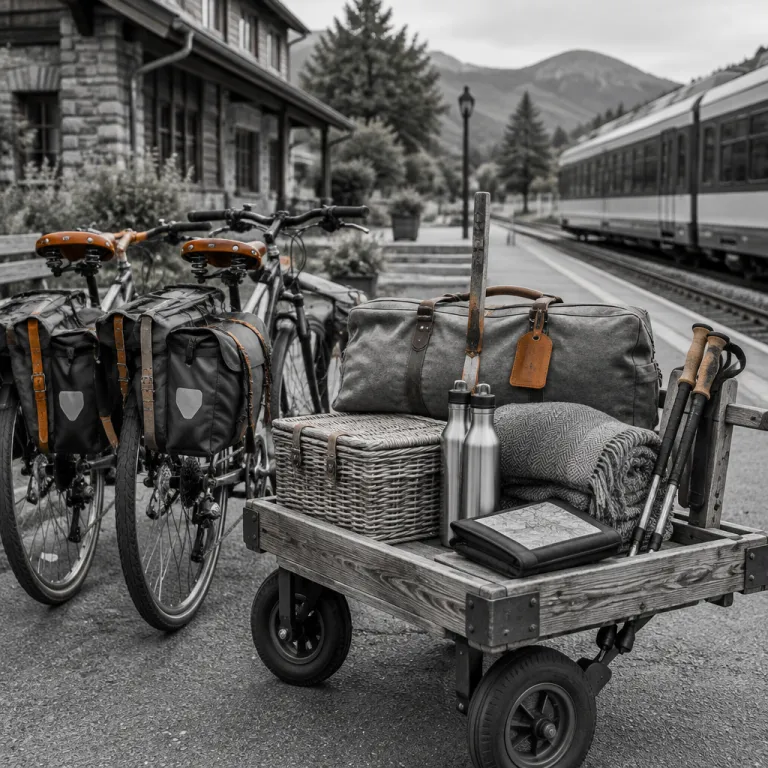
Why the journey defines a true eco-hotel luxury experience
Choosing an eco-hotel for your next trip only makes sense when the journey itself respects the same green values. When you compare long haul flying with cross country rail routes in regions dense with train travel options, the carbon savings can be dramatic and turn a simple vacation into a genuinely low impact experience. For a modern eco-hotel that champions train travel and car-free luxury, the way you reach the hotel by rail, shuttle or public transportation is now as important as the thread count on the sheets.
Many premium properties still promote sustainability while quietly assuming every guest will arrive by car. That contradiction becomes obvious when a hotel sits beside a train station or a national park railway spur yet offers no reliable service to help guests travel the last kilometres without a private vehicle. The most forward thinking eco-hotels now treat the arrival by train as part of the curated content of the stay, shaping the entire experience from the first grand view of a canyon, glacier or forest through the train window.
For travellers planning high end vacations, the question is no longer only which hotel to book but which rail corridor best aligns with their values. A carefully planned train trip through national parks or along a historic railway line can turn necessary transport into a highlight, especially when the hotel offers luggage transfers and car free activities that feel indulgent rather than restrictive. When you choose an eco-hotel that integrates train travel and car-free luxury, you are effectively booking a single seamless journey where rail, hotel and landscape form one continuous narrative.
European rail corridors and eco-hotel regions made for car-free stays
Europe remains the easiest continent for pairing train travel with a refined eco-hotel stay. Dense rail networks connect major cities to Alpine valleys, Mediterranean coasts and Scandinavian fjords, often placing you within a short shuttle ride or even walking distance of your hotel. For travellers seeking a low impact, car-free luxury destination, this means you can plan vacations that move from grand station halls to quiet forest paths without ever touching a steering wheel.
In Italy, for example, the line from Florence to Bolzano opens the door to south Tyrol, where car free villages and national park gateways sit close to the railway. Many properties here provide public transportation passes, allowing you to travel by bus, local train and cable car as part of the room rate, which turns the entire region into an extended park without traffic stress. When you combine such a stay with a refined Tuscan rail accessible retreat, such as an elegant eco-friendly bed and breakfast in Tuscany, you can design a cross country itinerary that feels both grand and intimate.
Scandinavia offers another level of immersion, with trains gliding past glacier carved valleys and deep forest national parks where wildlife still shapes the landscape. Here, eco-hotels often sit near a small train station and provide bikes, kayaks and guided hikes as part of the standard service for guests who arrive without a car. The result is a style of travel where the green choice is also the most luxurious, because every view from train window to hotel terrace reinforces the same quiet, low impact rhythm.
Properties built around the train station, not the parking lot
The most convincing rail-oriented eco-hotel is usually the one that treats the train station as its true front door. In these properties, staff track rail arrivals in real time, offer flexible shuttle service and design check in times around the main train schedules rather than airline slots. This approach turns what could be a stressful transfer into a smooth extension of the rail experience, with luggage handled efficiently and no pressure to rent a car.
Across the Alps and in regions like south Tyrol, several high end lodges now include complimentary pick up from the nearest railway stop as a core service, not an optional extra. Guests simply note their train details during booking, and the hotel will share a precise meeting point, often right beside the platform, so you step from rail carriage to electric van in minutes. Some properties go further and apply clear sustainability criteria to their transport partners, ensuring that every kilometre between train and hotel remains genuinely green.
Beyond Europe, similar thinking is emerging in North American wine regions, where car free stays are still the exception. In California, for example, travellers can pair regional rail with a short transfer to an elegant dog-friendly eco-hotel in Paso Robles, then rely on bikes and local shuttles instead of a private car for vineyard visits. In such places, the hotel curates the entire trip as a coherent experience, from the first rail journey through rolling hills to the last sunset view over the vines.
The sensory pleasure of arriving by rail at a national park
Arriving at a national park by train changes your relationship with the landscape from the first moment. Instead of circling a crowded parking lot, you step down onto a small platform where the air already smells of pine, salt or glacier fed rivers. That shift in pace is central to the car-free eco-hotel ethos, because it frames the whole vacation as a continuous immersion rather than a series of disconnected transfers.
In the United States, the historic Grand Canyon Railway from Williams, Arizona to the South Rim shows how powerful this can be when aligned with thoughtful lodging. Travellers board the train in a modest town, watch the desert unfold through wide windows, then arrive near the national park boundary where shuttles and trails replace private cars and the first canyon view feels earned rather than rushed. When nearby eco-focused hotels integrate their service with this railway, they create vacations where guests can explore the national park and surrounding parks entirely on foot, bike or guided transport.
Similar patterns appear in Canada, where rail routes skirt glacier fed lakes and protected national parks that prioritise public transportation over private vehicles. Here, high end lodges often sit just beyond the park boundary yet maintain strong links with park shuttles, ensuring guests remain free from car dependence while still enjoying every comfort. The result is a style of travel where the journey by train, the hotel stay and the protected park environment form one coherent, low impact, content rich experience.
Practical planning for seamless train-to-hotel eco vacations
Planning a low impact, rail based luxury vacation begins with mapping train corridors before you even choose the hotel. Start by identifying which national parks, canyons or coastal regions are served by a reliable railway or at least a well timed combination of train and public transportation. Once you know where the trains run, you can shortlist hotels that explicitly welcome car free guests and offer dependable options to bridge the last few kilometres.
Luggage is often the main concern for travellers used to renting a car for every trip. Many rail friendly hotels now offer luggage forwarding, allowing you to travel light on the train while your main bags move separately, and some will share detailed packing lists so you bring only what you truly need. When booking, look for clear information about station transfers, note whether the hotel will share real time updates on train delays, and check if they apply sustainability standards to any shuttle or taxi providers.
For multi stop vacations, consider rail passes that allow flexible train travel across borders, then anchor your itinerary around a few standout eco-hotels rather than many short stays. In Italy, for instance, you might pair a refined Tuscan fitness retreat reachable by rail, such as a refined eco-conscious fitness hotel in Tuscany, with a car free lodge in south Tyrol, linked by a scenic cross country train. This approach keeps the journey green, reduces check in fatigue and turns each transfer into part of the holiday rather than dead time between destinations.
Beyond Europe: rail-accessible eco-hotels in Asia and North America
Outside Europe, the fully rail-accessible eco-hotel remains a more niche proposition but is growing fast. Japan leads the way, with high speed rail and local lines connecting major cities to onsen towns, coastal parks and mountain retreats where arriving without a car is entirely normal. Many ryokan style properties near national parks offer pick up from the nearest train station and design their service so that guests can explore on foot, by bus or by bicycle.
In India, new luxury trains and upgraded railway corridors are opening access to wildlife reserves and hill stations where eco-conscious hotels are beginning to prioritise car free arrivals. Travellers can plan a grand cross country journey that links cities, tiger reserves and Himalayan foothill towns, staying in properties that provide guided safaris, village walks and cultural content without requiring a private car. When these hotels work with carefully vetted transport partners, they can offer rich experiences while still protecting guest privacy and keeping journeys as low impact as possible.
North America remains more car centric, yet there are notable exceptions where rail and eco-luxury align. Routes that approach the Grand Canyon, certain glacier fed lake regions and a handful of coastal national parks now offer rail access combined with shuttles and lodges that actively encourage guests to choose low impact options instead of driving. As more travellers signal that they prefer train travel and car free vacations, hotels that respond with thoughtful, transparent service open the path to a genuinely green, high comfort way of seeing the world.
How car-free eco-hotels handle data, content and third party services
Behind the scenes, the most sophisticated rail-oriented eco-hotels rely on a web of digital services to keep journeys smooth. When you book a combined rail and hotel trip, the property often works with external platforms to coordinate train times, shuttle schedules and national park permits. Responsible hotels are explicit about how they handle personal data, stating clearly which third party systems they use and under what conditions they will share your information with external providers.
On many booking sites, you will see options to accept essential cookies, enable certain features or allow specific providers to operate tools such as payment systems and maps. A trustworthy eco-hotel platform keeps this process transparent, explaining which elements are required for security or payment and which relate to optional marketing or analytics from other companies. When you choose to activate additional features, such as live train tracking or dynamic park shuttle updates, the best platforms ensure that only the minimum necessary data is processed.
For travellers, the key is to note whether a hotel or platform explains these systems in clear language rather than hiding them behind vague green claims. Look for privacy pages that specify which partners handle rail integrations, how long they store your data and how you can later change permissions or opt out. This level of clarity mirrors the physical transparency of a car free stay, where you can see the train station, the shuttle route and the protected park boundaries, and it reinforces trust in every aspect of the experience.
Key figures that show why train-to-hotel travel matters
- According to the European Environment Agency’s briefing on train and plane emissions (EEA, 2021), travelling by train on average produces around 14 grams of CO₂ per passenger kilometre, while air travel on similar routes can emit more than 150 grams per passenger kilometre, making rail over ten times less carbon intensive for many journeys.
- Data from the International Energy Agency’s The Future of Rail report (IEA, 2019) indicate that rail accounts for about 8 % of global motorised passenger travel but only around 2 % of transport energy use, highlighting how efficient modern railway systems are compared with private car travel.
- Research summarised by the International Union of Railways in its 2016 sustainability reports has shown that shifting just 10 % of medium distance trips from car or plane to train in Europe could save several million tonnes of CO₂ emissions annually, equivalent to the yearly emissions of a mid sized European city.
- Visitor management studies in major national parks such as Zion and Yosemite, reported by the U.S. National Park Service in the 2010s, have found that shuttle and rail based access can reduce peak season private car traffic by more than 20 %, improving air quality and the overall visitor experience.
- Surveys by national tourism boards in countries with strong rail networks, including Switzerland Tourism and the Japan National Tourism Organization, report that more than half of international visitors rate scenic train journeys as a highlight of their vacation, often ranking them alongside iconic park visits or city landmarks.
FAQ about eco-hotels accessible by train
How do I find eco-hotels that are genuinely accessible by train ?
Start by searching for hotels that list the nearest train station in their location details and explicitly mention shuttle service, walking routes or public transportation options for arrival. Cross check this with national railway maps and journey planners to confirm realistic travel times and connections. Properties that highlight car free packages or offer discounts for guests arriving by rail usually have the infrastructure and mindset to support this style of travel.
Is travelling by train always more sustainable than flying or driving ?
For most medium distance routes, especially under 1 000 kilometres, modern electric trains powered by relatively clean grids have significantly lower emissions per passenger than planes or private cars. The advantage is strongest on busy corridors where trains run frequently and carry many passengers, spreading the energy use efficiently. On very long routes or in regions with coal heavy electricity, the difference narrows, but rail generally remains one of the greenest mainstream options.
What should I consider when planning luggage for a train-to-hotel trip ?
Choose one main suitcase that you can comfortably roll along platforms and lift into overhead racks, plus a smaller daypack for valuables and essentials. Many rail friendly hotels offer luggage forwarding or station pick up, so check in advance whether they can handle heavier bags or sports equipment. Packing lighter not only makes train travel easier but also simplifies transfers to shuttles, bikes or walking paths at your destination.
How do last-mile transfers work if the hotel is not next to the station ?
Most rail oriented eco-hotels provide scheduled or on demand shuttles from the nearest station, often timed to meet key train arrivals and departures. Some properties partner with local taxi cooperatives or public bus services, offering vouchers or integrated tickets so you do not need a private car. Always confirm transfer details, costs and travel times before booking, and allow a buffer in your schedule for delays or missed connections.
Can I visit national parks and remote landscapes without renting a car ?
In many regions, especially in Europe, Japan and selected North American parks, it is entirely feasible to explore using a combination of trains, buses, shuttles and guided tours. Look for parks that advertise car free access or operate mandatory shuttle systems, as these usually have well designed public transportation networks. Pairing such destinations with eco-hotels that specialise in car free stays allows you to enjoy remote scenery, hiking and wildlife experiences while keeping your environmental impact low.